Discover the spiritual beauty of Bhubaneswar with Myodishajourney, your guide to Odisha’s famous temples, tourist destinations, culture, festivals, and travel experiences.
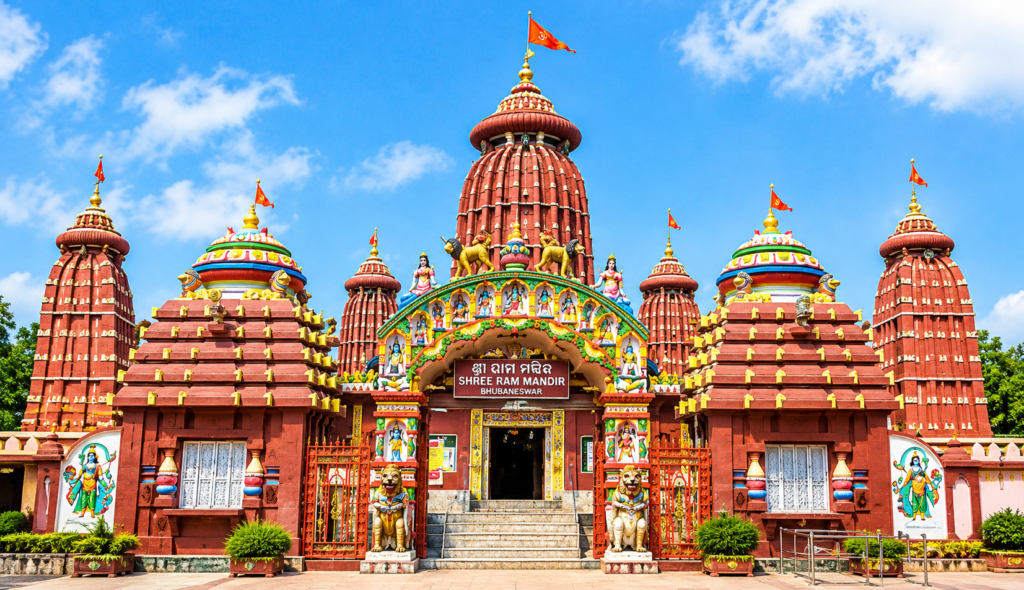
Bhubaneswar Ram Mandir is one of the well-known places of worship in Odisha’s capital. Dedicated to Lord Shri Rama, the temple attracts devotees who come to pray, seek blessings, and experience a peaceful spiritual atmosphere. Its tall temple spire is a familiar landmark in the city, and the temple is especially popular during Ram Navami and other Hindu festivals.
In this guide, you will learn about Ram Mandir Bhubaneswar, Lord Rama’s story and teachings, temple visiting hours, the significance of Ram Navami, the best time to visit, and useful travel information for planning your visit.
1. About Ram Mandir Bhubaneswar
Ram Mandir is a Hindu temple located in the central part of Bhubaneswar, near the Kharavel Nagar and Janpath area. The temple is dedicated to Lord Rama, who is worshipped as an incarnation of Lord Vishnu in Hindu tradition.
The main shrine features Lord Rama, Goddess Sita, and Lord Lakshmana. The temple complex also has shrines dedicated to other deities, including Lord Hanuman and Lord Shiva.
The temple is known for its prominent spire, devotional atmosphere, and morning and evening worship. It offers a spiritual place to visit for local residents, pilgrims, families, and tourists exploring Bhubaneswar.
Whether you are visiting for prayer or discovering Odisha’s religious heritage, Ram Mandir is a worthwhile stop on your Bhubaneswar travel itinerary.
2. History of Ram Mandir Bhubaneswar
Ram Mandir has become an important religious landmark in modern Bhubaneswar. Its prominent spire and central location make it easy to recognise while travelling through the city.
The temple is associated with the worship of Lord Rama, Goddess Sita, and Lord Lakshmana. Other shrines within the complex reflect the wider Hindu tradition of worship.
When was Ram Mandir built?
The exact construction date and a detailed, independently verified historical timeline for the present Ram Mandir are not consistently documented in the reliable sources available for this guide. Some online listings provide different dates, so it would not be accurate to present one disputed year as confirmed fact.
The temple is best described as a prominent, established place of Hindu worship in Bhubaneswar rather than an ancient archaeological monument with a fully documented construction history.
Why is the temple important?
Ram Mandir is important because it provides a place for devotees to worship Lord Rama and celebrate festivals connected with his life. It also forms part of Bhubaneswar’s wider religious landscape, which includes historic temples, modern shrines, sacred traditions, and cultural events.
For visitors, the temple offers an opportunity to understand how religious faith continues to be part of everyday life in Odisha’s capital.
3. Who Is Lord Shri Rama?
Lord Shri Rama is one of the most revered figures in Hinduism. Hindu tradition regards him as the seventh avatar, or incarnation, of Lord Vishnu.
According to the Ramayana, Lord Rama was born in Ayodhya to King Dasharatha and Queen Kaushalya. His life story describes his commitment to truth, duty, courage, compassion, family responsibilities, and righteousness.
Lord Rama married Goddess Sita, and his younger brother Lakshmana accompanied him during his period of exile. The epic also describes the devotion of Hanuman, the search for Sita, the battle against Ravana, and Rama’s eventual return to Ayodhya.
What can we learn from Lord Rama?
Lord Rama’s life continues to inspire millions of people. Important lessons associated with his story include:
- Truth and honesty: Speak truthfully and act with integrity.
- Respect for family: Value relationships and responsibilities.
- Courage: Face difficulties with determination.
- Compassion: Treat others with kindness and respect.
- Duty and righteousness: Try to choose what is right, even when it is difficult.
These values are a major reason why devotees worship Lord Rama and celebrate important occasions connected with his life.
4. Ram Mandir Bhubaneswar Darshan Timings
Planning your visit at the right time can help you enjoy a more comfortable darshan.
The Odisha Government’s Hindu Religious Endowment temple listing gives the following general visiting hours for Ram Mandir Bhubaneswar.
| Details | Information |
|---|---|
| Temple | Ram Mandir, Bhubaneswar |
| General opening time | 6:00 AM |
| General closing time | 9:30 PM |
| Entry | No regular entry fee is generally listed |
| Best time for a peaceful visit | Early morning |
| Popular time for worship | Morning and evening |
| Special occasions | Ram Navami and other Hindu festivals |
Important: These are general published hours, not a guarantee of the current daily darshan or aarti schedule. Timings may change for festivals, special pujas, or temple arrangements. Confirm with the temple before travelling, particularly on Ram Navami.
What is the best time for darshan?
Early morning: Visiting after the temple opens can provide a quieter atmosphere for prayer and darshan.
Late afternoon or evening: This can be a good time to experience the devotional atmosphere and evening worship.
Ram Navami: The temple may be especially busy because of festival worship and celebrations. Arrive early, allow extra time, and follow the instructions of temple staff.
5. Best Time to Visit Ram Mandir Bhubaneswar
Bhubaneswar can be visited throughout the year, but the experience depends on the weather and your travel plans.
October to February: Comfortable sightseeing
These months are generally suitable for exploring Bhubaneswar because the weather is often more comfortable than during the peak summer. You can combine a temple visit with other tourist attractions around the city.
March to June: Summer season
Summer can be very hot, particularly during the afternoon. If you visit during these months, consider going early in the morning or later in the day. Carry drinking water and plan outdoor sightseeing carefully.
July to September: Monsoon season
Rain may affect road travel and outdoor plans. The city remains worth exploring, but check the weather forecast before visiting several places in one day.
Best time of day
For most visitors, early morning is a good choice for peaceful darshan. Evening is another option for those who want to experience the temple atmosphere after a day of sightseeing.
If your main purpose is to attend Ram Navami celebrations, plan around the festival date rather than choosing your trip solely by season.
6. Ram Navami Festival at Ram Mandir Bhubaneswar
Ram Navami is one of the important Hindu festivals associated with Lord Rama. It is observed on the ninth day of the bright fortnight of the Hindu lunar month of Chaitra, usually in March or April.
The festival celebrates the birth of Lord Rama according to Hindu tradition. Devotees visit temples, offer prayers, sing devotional songs, read or listen to the Ramayana, and reflect on the values represented by Rama’s life.
At Ram Mandir Bhubaneswar, Ram Navami is recognised as a major festival. The temple may hold special worship and devotional activities for the occasion. Exact programmes and timings should be confirmed locally each year.
Why do people celebrate Ram Navami?
Ram Navami is celebrated to honour the birth of Lord Rama, who is regarded in Hindu tradition as an incarnation of Lord Vishnu.
The festival is meaningful for several reasons:
1. To celebrate the birth of Lord Rama
Devotees remember the birth of Rama in Ayodhya to King Dasharatha and Queen Kaushalya.
2. To remember the victory of good over evil
The Ramayana tells the story of Rama’s battle against Ravana. This story is commonly understood as a reminder of the importance of righteousness and the struggle against wrongdoing.
3. To follow the teachings of Lord Rama
The festival encourages people to reflect on truth, courage, respect, compassion, and responsibility.
4. To express devotion through prayer
Many devotees visit temples, chant Rama’s name, sing bhajans, listen to religious stories, and offer flowers or other traditional offerings.
5. To bring families and communities together
Ram Navami creates opportunities for shared prayer, cultural activities, and community celebrations.
How is Ram Navami celebrated?
Customs differ between regions and temples, but celebrations may include:
- Special puja and darshan.
- Bhajans and devotional singing.
- Readings from the Ramayana or Ramcharitmanas.
- Fasting by devotees who choose to observe it.
- Offerings of flowers, fruit, and traditional prasad.
- Religious discourses and community programmes.
Some traditions perform special worship around midday, which is associated with the birth of Lord Rama. However, the exact ritual schedule at Ram Mandir Bhubaneswar should be checked with the temple rather than assumed.
Tips for visiting during Ram Navami
- Confirm the festival date and temple programme in advance.
- Arrive early because the number of devotees may be higher than usual.
- Allow extra time for traffic, queues, and parking.
- Follow temple instructions and respect worshippers.
- Carry drinking water and essential items for waiting outdoors.
- Check whether any temporary entry, photography, or crowd-management rules apply.
Ram Navami is a meaningful time to experience the devotion surrounding Lord Rama, but visitors should plan for possible crowds and changes to normal temple routines.
7. Other Festivals Celebrated at Ram Mandir
Ram Navami is not the only religious occasion associated with Ram Mandir Bhubaneswar. The temple is also listed as celebrating several other Hindu festivals.
Vivaha Panchami
Vivaha Panchami commemorates the traditional wedding of Lord Rama and Goddess Sita. Devotees remember their marriage through prayer and religious observances.
Janmashtami
Janmashtami celebrates the birth of Lord Krishna, another important incarnation of Lord Vishnu in Hindu tradition.
Dussehra
Dussehra is associated with the victory of good over evil. In many traditions, it recalls Rama’s victory over Ravana.
Shivaratri
Maha Shivaratri is dedicated to Lord Shiva and is observed through prayer, worship, and other devotional practices.
Pana Sankranti
Pana Sankranti marks the Odia New Year and is an important cultural and religious occasion in Odisha.
Raksha Bandhan
The temple has also been associated with an annual fair during Raksha Bandhan. Visitors should confirm whether a fair or special programme is planned for the year of their visit.
Festival arrangements may vary annually, so these celebrations should not be taken as a confirmed schedule of events for a particular date.
8. How to Reach Ram Mandir Bhubaneswar
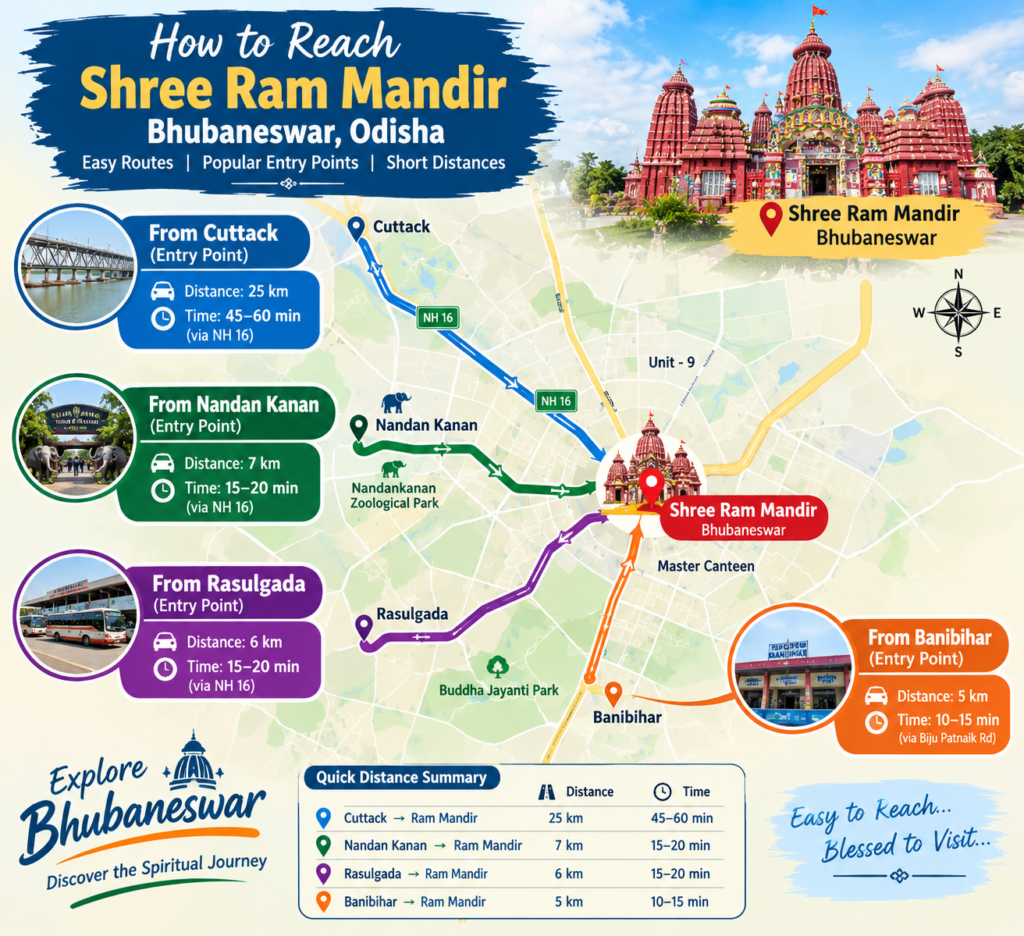
Ram Mandir is located in central Bhubaneswar, near the Kharavel Nagar and Janpath area. It can generally be reached by road from different parts of the city.
By train
Bhubaneswar Railway Station is a convenient rail arrival point for visitors coming from other cities. From the station, you can continue to the temple by taxi, auto-rickshaw, or another local transport service.
By air
Biju Patnaik International Airport serves Bhubaneswar. After arriving at the airport, you can take a taxi or other available road transport to reach the temple.
By bus
Bhubaneswar is connected to other cities in Odisha and neighbouring states by bus. Once in the city, use local transport to reach the temple area.
By taxi or auto-rickshaw
Local taxis and auto-rickshaws are practical choices for reaching Ram Mandir. Giving the driver the name “Ram Mandir near Janpath, Bhubaneswar” can help clarify your destination.
Travel tip: Confirm your route and current traffic conditions before leaving. If visiting during Ram Navami or another major festival, allow additional time for road congestion.
9. Introduction to Bhubaneswar Smart City

Bhubaneswar is the capital of Odisha and is widely known as the Temple City of India. It combines a rich cultural and religious heritage with modern urban development.
The city has a long history associated with ancient Kalinga, while modern Bhubaneswar was planned in the twentieth century and formally inaugurated as Odisha’s capital on 13 April 1948.
Today, Bhubaneswar is known for its temples, educational institutions, public spaces, growing technology sector, and connections to other popular destinations in Odisha.
Bhubaneswar Smart City Limited was established to implement the city’s Smart City development programme. Its objectives include improving urban services, supporting sustainable development, and making the city more liveable.
What makes Bhubaneswar special for tourists?
Bhubaneswar offers a mixture of spiritual experiences, heritage sites, green spaces, shopping areas, local food, and modern city life.
Visitors can explore traditional temples, learn about Odisha’s cultural history, enjoy Odia cuisine, and use the city as a starting point for trips to other destinations.
Places to explore during your Bhubaneswar visit
Depending on your interests and available time, you may consider:
- Lingaraj Temple: An important historic temple dedicated to Lord Shiva in his Harihara form.
- Udayagiri and Khandagiri Caves: Historic rock-cut caves associated with Jain heritage.
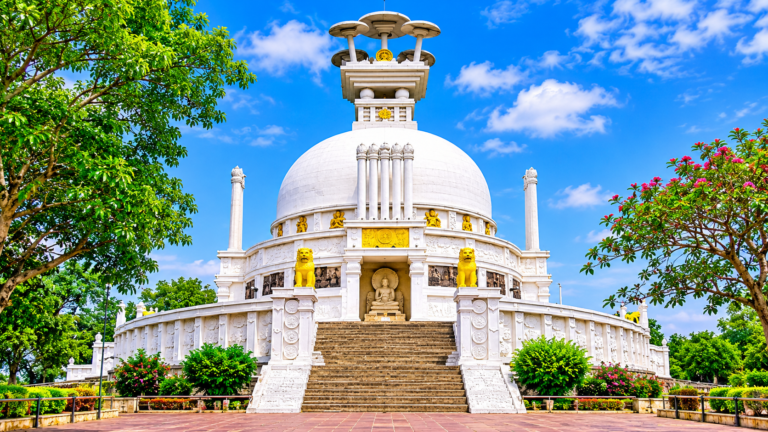
- Dhauli Shanti Stupa: A landmark associated with the history of Ashoka and the Kalinga War.
- Nandankanan Zoological Park: A major wildlife attraction near Bhubaneswar.
- Odisha State Museum: A place to learn about the region’s history, art, and cultural heritage.
Check opening hours, entry requirements, and transport arrangements before visiting each attraction.
Bhubaneswar’s combination of religious heritage and modern development makes it an interesting destination for domestic and international travellers.
10. Places to Visit Near Ram Mandir
If you have additional time, you can include Ram Mandir in a broader Bhubaneswar sightseeing plan.
The city has many temples and cultural attractions, but the best itinerary depends on opening times, distance, transport, and how much time you want to spend at each place.
You can explore historic temples, visit museums, discover local markets, or enjoy traditional Odia food. If you plan to travel beyond Bhubaneswar, popular destinations such as Puri and Konark can be considered as part of a longer Odisha trip.
Do not try to visit every attraction in a single day. Allow enough time for darshan, meals, rest, and travel between locations.
11. Useful Tips Before Visiting Ram Mandir
To make your visit comfortable and respectful, keep the following suggestions in mind:
- Check the temple’s latest opening hours before departure.
- Dress respectfully for a place of worship.
- Follow instructions regarding footwear, photography, and entry into worship areas.
- Be considerate of devotees who are praying.
- Avoid blocking entrances or walkways while taking photographs.
- Keep the temple premises clean.
- Carry water during hot weather.
- Allow extra time during festivals and special pujas.
- Confirm any special arrangements directly with temple authorities.
Visitors should also remember that darshan arrangements and rituals can change. Current instructions from temple staff take priority over general online travel guides.
Frequently Asked Questions About Ram Mandir Bhubaneswar
Find helpful answers about Ram Mandir Bhubaneswar, darshan timings, Ram Navami celebrations, and travel planning.
Where is Ram Mandir located in Bhubaneswar?
Ram Mandir is in central Bhubaneswar, near the Kharavel Nagar and Janpath area of Odisha’s capital.
What are the general darshan timings of Ram Mandir Bhubaneswar?
Published government temple listings give general visiting hours of 6:00 AM to 9:30 PM. Confirm the current schedule before visiting because special occasions can affect normal hours.
Is there an entry fee?
A regular entry fee is generally not listed for the temple. Confirm locally if you are visiting during a special event or programme.
When is the best time to visit Ram Mandir?
Early morning is a good choice for a peaceful visit. Evening is also popular for worship. October to February is generally a comfortable season for sightseeing in Bhubaneswar.
Why is Ram Navami celebrated?
Ram Navami celebrates the birth of Lord Rama according to Hindu tradition. It also encourages devotees to remember the values of truth, courage, duty, and righteousness associated with his life.
When does Ram Navami take place?
It falls on the ninth day of the bright fortnight of the lunar month of Chaitra, usually in March or April. The Gregorian date changes each year.
Is Ram Navami celebrated at Ram Mandir Bhubaneswar?
Ram Navami is listed among the temple’s major festivals. Confirm the exact programme and darshan arrangements with the temple for the relevant year.
Is Ram Mandir suitable for international visitors?
Yes. Visitors interested in Hindu traditions, religious architecture, and local culture may find the temple a worthwhile stop. Dress respectfully and follow local worship guidelines.
How much time should I plan for the temple visit?
A short visit may take around 30–60 minutes, depending on queues, prayer time, and how long you wish to stay. Allow more time during major festivals. This is a planning estimate, not an official visit duration.
Explore Odisha. Feel Odisha. — Myodishajourney