Explore Odisha. Feel Odisha. Welcome to Myodishajourney, your travel guide to discovering the beautiful destinations, historical places, temples and cultural heritage of Odisha.
If you are planning a trip to Bhubaneswar, Dhauli Giri should be on your sightseeing list. Located near the peaceful banks of the Daya River, Dhauli is famous for the white Buddhist Peace Pagoda, also known as the Dhauli Shanti Stupa. It is closely connected with Emperor Ashoka, the historic Kalinga War and the message of peace.
But Dhauli is more than a historical monument. Visitors can explore ancient rock edicts, see the famous elephant sculpture, visit nearby Shiva temples, enjoy beautiful hilltop views and experience the evening Light and Sound Show.
This complete Myodishajourney guide explains the history of Dhauli, what to see, how to reach, the best time to visit, entry fees, show timings and useful travel tips. Whether you are visiting with family, friends, children or travelling from another country, this guide will help you plan your visit.
1. What Is Dhauli Giri in Odisha?
Dhauli Giri, also called Dhauligiri or Dhauli Hill, is a historically important hill located near Bhubaneswar in Khordha district, Odisha. It stands close to the Daya River and is one of the most recognised heritage destinations in the state.
Dhauli is especially famous for three things:
- Kalinga War: The area is associated with the historic war fought by Emperor Ashoka against Kalinga around 261 BCE.
- Dhauli Shanti Stupa: A beautiful white Buddhist Peace Pagoda built to represent peace, compassion and non-violence.
- Ashokan Rock Edicts: Ancient inscriptions connected with Emperor Ashoka and his message of good governance and compassion.
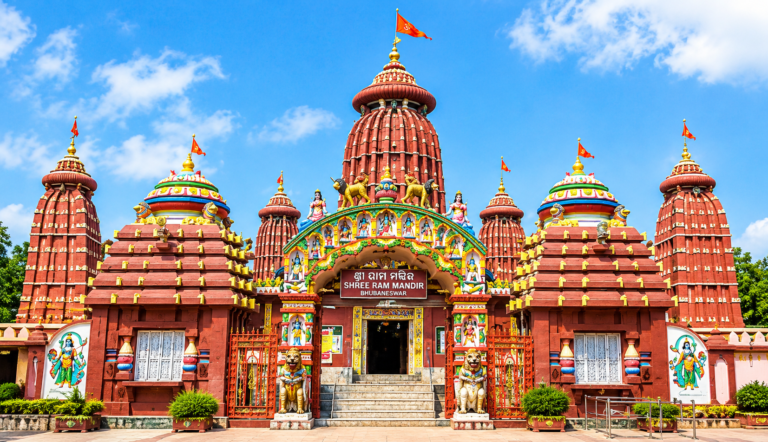
Dhauli is also a spiritual destination. Visitors can find Hindu Shiva temples in the surrounding hill area, including Dhabaleswar Mahadev Temple.
The combination of history, Buddhism, Hindu worship, nature and scenic views makes Dhauli a special place to explore near Bhubaneswar.
2. History of Dhauli Giri and the Kalinga War
The history of Dhauli goes back more than 2,000 years to the time of the Mauryan Empire.
Around 261 BCE, Emperor Ashoka fought the Kalinga War. Ancient Kalinga was a powerful region, and the conflict caused enormous destruction and loss of life.
The war is traditionally associated with the area around Dhauli and the Daya River. Historical accounts describe how the suffering caused by the battle deeply affected Ashoka.
After the war, Ashoka began to follow the principles of peace, compassion and Dhamma. He became closely associated with the spread of Buddhist teachings and the idea that people should be treated with kindness and respect.
Dhauli is remembered as an important place connected with this transformation. It represents a powerful historical message: peace and humanity are greater than war and destruction.
Why is Dhauli important?
- It is associated with the Kalinga War.
- It preserves Ashokan inscriptions.
- It is an important place in the history of Buddhism in Odisha.
- It represents the message of peace and non-violence.
- It attracts visitors, students, historians and Buddhist pilgrims.
3. Dhauli Shanti Stupa – The Famous White Peace Pagoda
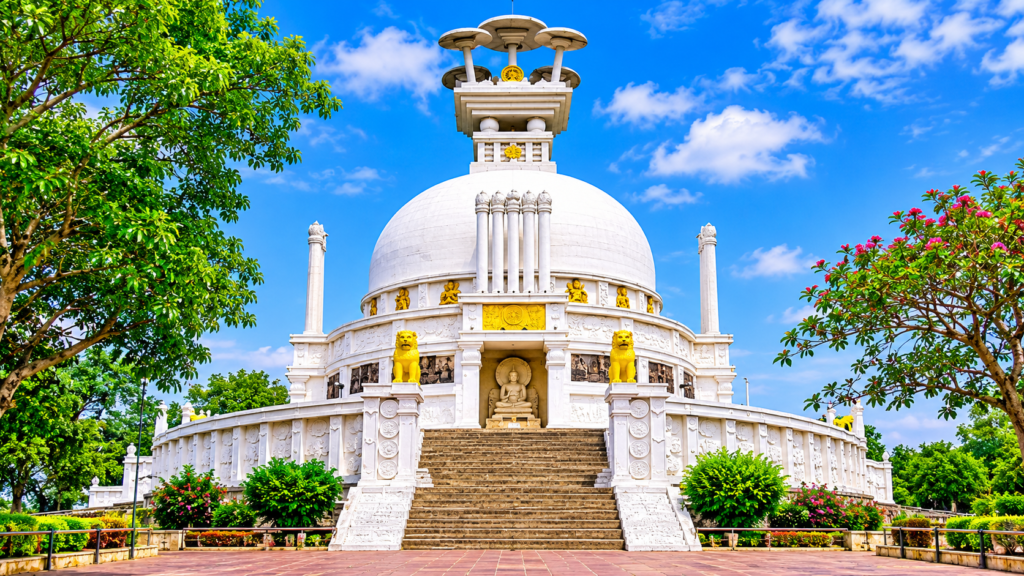
The Dhauli Shanti Stupa is the most famous attraction on Dhauli Hill. It is also called the Peace Pagoda.
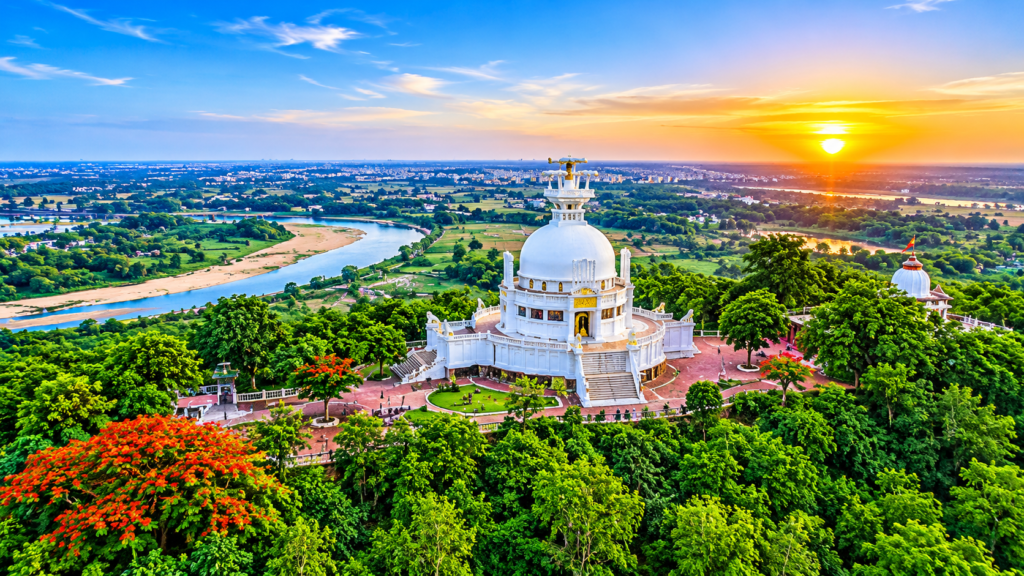
The beautiful white structure stands on the hill and can be seen from a distance. Its peaceful surroundings make it a popular place for visitors who want to enjoy history, spirituality and nature.
The Shanti Stupa was built in 1972–1973 through the efforts of the Japan Buddha Sangha and the Kalinga Nippon Buddha Sangha. It was created to commemorate the message of peace associated with Emperor Ashoka and the Kalinga War.
What can you see at the Shanti Stupa?
- A large white Buddhist dome.
- Beautiful Buddha sculptures and stone panels.
- Buddhist symbols and scenes connected with the life of Buddha.
- Lion sculptures and decorative architectural details.
- Views of the Daya River and the surrounding green landscape.
- A peaceful atmosphere for photography and quiet reflection.
Visitors should walk around the monument and take time to observe its sculptures and details. Please respect the religious atmosphere and follow any instructions displayed at the site.
4. Ashokan Rock Edicts and the Famous Elephant Sculpture
Do not miss the Ashokan Rock Edicts while visiting Dhauli.
These ancient inscriptions are located near the base of the hill. They are associated with Emperor Ashoka and date back to the 3rd century BCE.
The inscriptions are written in Prakrit language using the Brahmi script. They communicate ideas connected with Dhamma, public welfare, good conduct and responsible administration.
One of the most interesting features is the elephant sculpture carved from the rock. The head and front part of the elephant emerge from the stone, making it a remarkable historical attraction.
Visitor tip: Ask your driver to include the Ashokan Rock Edicts and elephant sculpture in the visit. Do not visit only the hilltop Stupa and miss this important part of Dhauli’s history.
5. Shiva Temple at Dhauli Giri – Dhabaleswar Mahadev Temple
Dhauli is also associated with Hindu religious traditions. Visitors interested in Lord Shiva can explore the nearby Shiva temples in the Dhauli Hill area.
One of the temples identified in government heritage records is Dhabaleswar Mahadev Temple, dedicated to Lord Shiva.
The temple offers a different spiritual experience from the Buddhist Shanti Stupa. Visitors can include it in their Dhauli sightseeing plan and offer prayers according to the temple’s local customs.
Government district tourism information also mentions Vairangeswar Mahadev and Dhabaleswar Mahadev as temples in the Dhauli area. These are separate local religious sites, so visitors should confirm the particular temple they want to visit with their driver or a local guide.
What is special about the Shiva temple?
- It is a Hindu place of worship dedicated to Lord Shiva.
- It adds a religious dimension to the Dhauli heritage visit.
- It is especially relevant for devotees visiting during Shiva-related festivals.
- It can be included with the Shanti Stupa and Ashokan Rock Edicts in one sightseeing trip.
When was the Shiva temple built?
The exact original construction date of Dhabaleswar Mahadev Temple is not clearly established in the readily available official visitor information. It is better not to give an unverified year as historical fact.
The Shanti Stupa’s construction in the early 1970s should not be confused with the age of the Shiva temple.
Important: The Dhauli Shanti Stupa is a Buddhist monument, while Dhabaleswar Mahadev is a Hindu Shiva temple. They are different religious sites within the wider Dhauli area.
6. Dhauli Light and Sound Show – Night Show Experience
The Dhauli Light and Sound Show is one of the most interesting evening experiences near Bhubaneswar.
During the show, colourful lights and projection visuals illuminate the white Shanti Stupa. Through narration, music and visual effects, visitors learn about the history of Kalinga, the Kalinga War, Emperor Ashoka and his transformation towards peace.
The show helps visitors understand why Dhauli is such an important place in Indian history.
What will you see in the night show?
- Colourful projection visuals on the Shanti Stupa.
- Scenes connected with the Kalinga War.
- The story of Emperor Ashoka.
- The transformation from war to peace.
- Historical narration with music and sound effects.
Dhauli Light and Sound Show – Timings
Odisha Tourism information lists evening shows in different languages, with timings that may change by season.
The published information includes approximately:
- Hindi: Around 7:00 PM.
- English: Around 7:30 PM.
- Duration: Approximately 35 minutes.
The local tourism listing has also published different seasonal starting times. Therefore, these are planning estimates, not a guarantee of the show schedule on your visit date.
Myodishajourney travel tip: Reach Dhauli before sunset, explore the Shanti Stupa and nearby attractions, and then confirm the day’s show schedule and language at the venue or through the official booking service.
Dhauli Light and Sound Show Ticket Price
Published ticket prices differ between tourism information pages.
- Odisha Tourism Development Corporation information has listed approximately ₹100 for adults and ₹50 for students.
- An older Bhubaneswar tourism listing shows ₹25 for adults and ₹10 for students.
These prices may be from different periods or booking arrangements. Do not assume that the older lower prices are still valid.
Before visiting, confirm the current ticket price, student concession, available languages, show dates and booking process through the official Odisha Tourism or OTDC booking service.
7. Dhauli Giri Entry Fee and Visiting Timings
One common question visitors ask is whether they need to purchase a ticket to enter Dhauli Shanti Stupa.
Odisha Tourism currently lists the general entry to Dhauli Shanti Stupa as free. The Light and Sound Show is a separate ticketed experience.
General visitor information
| Visitor information | Details |
|---|---|
| Destination | Dhauli Shanti Stupa |
| Location | Dhauli, Bhubaneswar, Odisha |
| General entry fee | Free, according to Odisha Tourism |
| General visiting hours | Official listing: 6:00 AM–6:00 PM |
| Best sightseeing period | Morning or late afternoon |
| Light and Sound Show | Separate ticket |
| Ideal visit duration | Around 1–2 hours, longer if attending the show |
Some local tourism information lists different opening hours. Timings can also vary because of maintenance, special events or local arrangements. Confirm the latest visiting hours before travelling.
8. Best Time to Visit Dhauli Giri
The best time to visit Dhauli is generally from October to March, when the weather in Bhubaneswar is more comfortable for sightseeing.
October to February – Pleasant Weather
This is a comfortable period for walking around the hill, exploring the Shanti Stupa and visiting the rock edicts.
March to May – Summer Season
Odisha can become very hot during these months. If you visit in summer, choose early morning or late afternoon and carry drinking water, a cap and sunscreen.
June to September – Monsoon Season
The surroundings can become greener during the rainy season. However, rain and slippery walking surfaces may make sightseeing less comfortable. Check the weather before travelling.
Best time of the day
- Morning: Suitable for peaceful sightseeing and photography.
- Late afternoon: A good time to enjoy the views and explore before sunset.
- Evening: Best if you plan to attend the Light and Sound Show, subject to its operating schedule.
9. How to Reach Dhauli Shanti Stupa from Bhubaneswar

Dhauli is located a short drive from Bhubaneswar. It is accessible by road and can be included in a local sightseeing tour.
By Road
Road travel is the most convenient way to reach Dhauli.
From central Bhubaneswar, travel towards the Puri Road corridor and follow the signboards for Dhauli or Dhauli Chhak. From the junction, take Dhauli Road towards the hill and Shanti Stupa.
You can travel by:
- Private car.
- Taxi or cab.
- Auto-rickshaw, depending on availability and the agreed drop-off point.
- Rental bike or scooter.
The distance is commonly described as around 8–10 km from central Bhubaneswar, but the actual distance and journey time depend on your starting point and traffic.
By Train
The nearest major railway station is Bhubaneswar Railway Station.
After reaching the station, you can hire a taxi or auto-rickshaw to Dhauli. There may not be a direct convenient public transport service all the way to the hilltop, so confirm your onward transport before starting.
By Air
The nearest airport is Biju Patnaik International Airport, Bhubaneswar.
From the airport, you can hire a taxi or use a suitable local transport service to reach Dhauli.
From Bhubaneswar Railway Station
- Exit the railway station.
- Hire a taxi or auto-rickshaw.
- Travel towards the Puri Road side of Bhubaneswar.
- Follow the road signs for Dhauli Chhak.
- Continue along Dhauli Road towards Dhauli Hill.
- Visit the Ashokan Rock Edicts and then proceed to the Shanti Stupa.
From Biju Patnaik International Airport
- Take a taxi or private vehicle from the airport.
- Follow the road towards the Dhauli/Puri Road side.
- Continue towards Dhauli Chhak.
- Follow the signs to Dhauli Hill and the Shanti Stupa.
From Puri
Visitors travelling from Puri towards Bhubaneswar can plan Dhauli as a sightseeing stop, depending on their route and available time. Check your navigation app for the current road route and traffic before starting.
Important road guide: Use Google Maps or another live navigation service for exact kilometres, travel time and turn-by-turn directions. Road conditions, diversions and traffic can change.
10. How Much Time Should You Spend at Dhauli?
Your visit duration depends on whether you only want to see the Shanti Stupa or also explore the other attractions.
- Quick visit: Around 45–60 minutes for the main monument.
- Complete sightseeing: Around 1.5–2 hours for the Shanti Stupa, rock edicts and nearby temples.
- Evening visit: Allow extra time if you plan to attend the Light and Sound Show.
If you are visiting with children, senior citizens or people who need extra walking support, allow more time and avoid rushing.
11. Places to See at Dhauli Giri
Try to include these attractions in your visit:
- Dhauli Shanti Stupa: The famous white Peace Pagoda.
- Ashokan Rock Edicts: Ancient inscriptions associated with Emperor Ashoka.
- Elephant Rock Sculpture: A distinctive elephant carving emerging from the rock.
- Dhabaleswar Mahadev Temple: A nearby Shiva temple.
- Vairangeswar Mahadev Temple: Another Shiva temple mentioned in government district tourism information.
- Daya River View: Enjoy the landscape around the river and surrounding plains.
- Light and Sound Show: An evening presentation about Ashoka and the Kalinga War, when operating.
12. Nearby Tourist Places to Visit with Dhauli
If you have additional time, you can combine Dhauli with other attractions around Bhubaneswar.
- Lingaraj Temple: An important historic Shiva temple in Bhubaneswar.
- Udayagiri and Khandagiri Caves: Famous ancient Jain caves.
- Hirapur Chausathi Yogini Temple: A historic circular temple dedicated to the sixty-four Yoginis.
- Mukteswar Temple: Known for its beautiful Kalinga-style architecture.
- Rajarani Temple: A historic temple known for its stone carvings.
Plan the order of these places according to their locations, opening hours and your available time.
13. Is Dhauli Suitable for Families, Children and International Tourists?
Yes. Dhauli can be a meaningful sightseeing destination for families, students, history lovers and international visitors.
For Families
Families can explore the Shanti Stupa, learn about Ashoka’s history and enjoy the hilltop surroundings. Keep children close to you around steps, slopes and vehicle movement.
For Children and Students
Dhauli is a useful educational visit because it introduces children to the Kalinga War, Emperor Ashoka, ancient inscriptions and the history of Buddhism.
Parents and teachers can explain the importance of peace, compassion and non-violence.
For International Tourists
International visitors interested in Buddhism, ancient Indian history and heritage architecture may find Dhauli especially interesting.
Visitors should carry suitable identification and follow the site’s entry, photography and security instructions.
14. Useful Travel Tips Before Visiting Dhauli
Keep these simple tips in mind:
- Visit early in the morning or later in the afternoon to avoid strong daytime heat.
- Wear comfortable footwear for walking around the hill.
- Carry drinking water, sunscreen and a cap.
- Keep children under supervision.
- Respect the religious environment at the Shanti Stupa and Shiva temples.
- Follow instructions about footwear and photography.
- Do not touch or damage historical inscriptions and sculptures.
- Avoid littering and keep the heritage area clean.
- Confirm the Light and Sound Show schedule before planning your evening.
- Check the latest ticket price and booking details before travelling.
- Keep enough time for the return journey, especially after the evening show.
Dhauli Giri is one of the important historical and spiritual destinations near Bhubaneswar. Its connection with the Kalinga War, Emperor Ashoka, the Ashokan Rock Edicts and the beautiful Shanti Stupa makes it a memorable place to explore.
You can spend your time learning about history, enjoying the peaceful hilltop atmosphere, visiting nearby Shiva temples and watching the Light and Sound Show if it is operating on your visit date.
If you are planning a trip to Bhubaneswar, keep Dhauli in your travel itinerary. Visit respectfully, check the latest timings and ticket information, and take time to enjoy the place.
Myodishajourney – Explore Odisha. Feel Odisha.
At Myodishajourney, our aim is to help every traveller discover Odisha’s temples, historical places, natural beauty, culture and local experiences through simple and useful travel guides.
Explore Odisha with Myodishajourney and create beautiful memories along the way.
Important visitor information: Timings, show schedules, ticket prices, road conditions and local arrangements may change. Please verify current details with official Odisha Tourism, OTDC or the site authorities before travelling.
Where is Dhauli Giri located?
Dhauli Giri is located near Bhubaneswar in Khordha district, Odisha, close to the Daya River.
Why is Dhauli famous?
Dhauli is famous for the Kalinga War, Emperor Ashoka’s association with the region, Ashokan Rock Edicts and the white Dhauli Shanti Stupa.
Who built the Dhauli Shanti Stupa?
The Shanti Stupa was built in the early 1970s through the efforts of the Japan Buddha Sangha and the Kalinga Nippon Buddha Sangha.
Is there an entry fee for Dhauli Shanti Stupa?
Odisha Tourism lists general entry to the Shanti Stupa as free. The Light and Sound Show requires a separate ticket.
What are the visiting timings of Dhauli Shanti Stupa?
Odisha Tourism lists general visiting hours as 6:00 AM to 6:00 PM. Check the latest local timings before your visit because other listings show different hours.
What is the Light and Sound Show timing at Dhauli?
Published schedules include evening shows around 7:00 PM and 7:30 PM, but the schedule may change by season and operating arrangements. Confirm the day’s show timings before travelling.
What is the ticket price for the Dhauli night show?
OTDC information has listed approximately ₹100 for adults and ₹50 for students, while older tourism information shows lower prices. Confirm the current fare through the official booking service before visiting.
Is the Dhauli Light and Sound Show available every day?
Some tourism listings state that the show is closed on Mondays. Confirm the current operating days and show availability before planning your trip.
Which language is available for the Dhauli Light and Sound Show?
Tourism information lists Odia, Hindi and English presentations. Confirm the language schedule for your visit date.
How far is Dhauli from Bhubaneswar?
Dhauli is commonly described as around 8–10 km from central Bhubaneswar. The exact distance depends on your starting point.
Is there a Shiva temple at Dhauli?
Yes. Dhabaleswar Mahadev Temple is a Shiva temple in the Dhauli area. Government district tourism information also mentions Vairangeswar Mahadev Temple.
When was the Dhabaleswar Shiva Temple built?
A reliable original construction date is not clearly established in the visitor information consulted. Visitors should avoid relying on unverified dates.
How much time is needed to explore Dhauli?
Around 1–2 hours is a useful estimate for the main attractions. Allow additional time if you plan to watch the Light and Sound Show.
Can I visit Dhauli with my family?
Yes. It is a popular heritage and sightseeing destination. Families should take care around steps and slopes and supervise children.
What is the best month to visit Dhauli?
October to March is generally a comfortable period for sightseeing because the weather is usually more pleasant.